Why acquisition fees matter more than you think
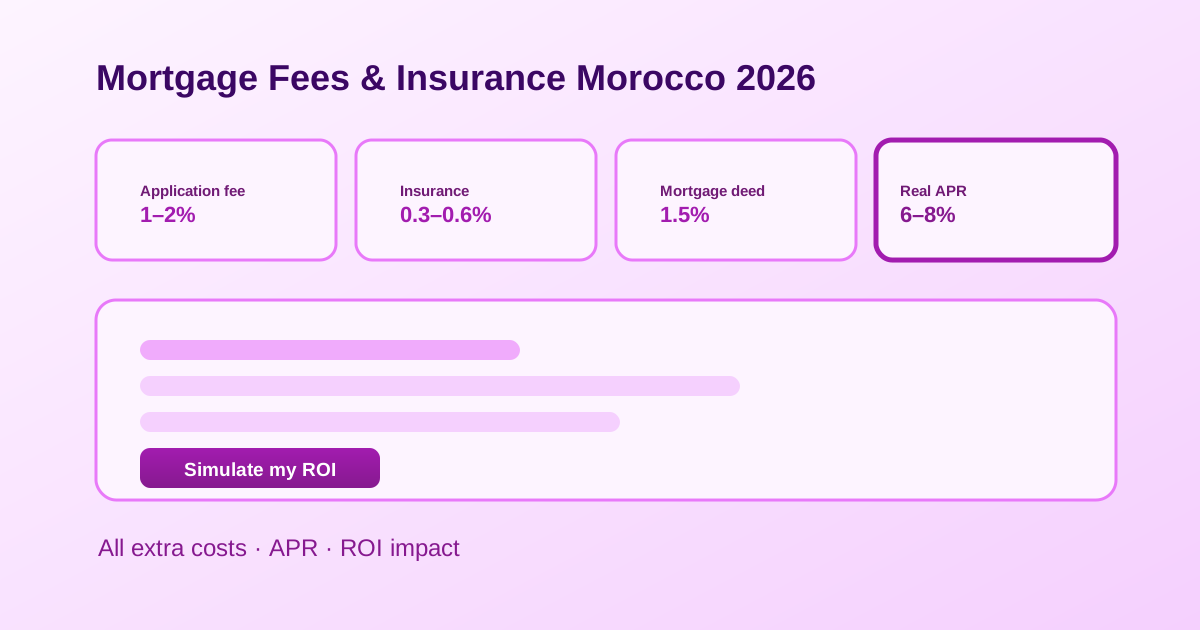
Acquisition fees are mandatory costs tied to the purchase. They generate no income but increase the capital you lock into the deal. With the same rental income, higher fees lower your cash-on-cash ROI, which is why they should be included from day one.
Many tools ignore these costs or treat them as minor. Yet at 7% of price, they materially change returns. On a 1,000,000 MAD property, that is about 70,000 MAD of extra capital.
Our rental ROI calculator includes these fees by default to keep your projections realistic.
Registration duty (4%)
Registration duty is a tax collected when the sale deed is registered. In Morocco, it is generally 4% of the purchase price for urban property. It is the largest component of acquisition costs.
Under-declaring can reduce tax on paper but creates legal and fiscal risk. A healthy investment is based on a transparent deed and accurate valuation.
Treat this 4% as a fixed cost in your model and include it in the ROI calculator for accurate results.
Land registry (1.5%)
Land registry fees cover registration and transfer in the land book. They are typically around 1.5% of the property value. This step secures your title and protects your ownership rights.
Skipping or minimizing this process weakens legal protection and can complicate resale or financing later. It is a cost that protects your investment.
Include it in your investment calculator to measure the real cash you must deploy.
Notary fees and VAT
Notary fees are usually around 1% of the purchase price. VAT adds roughly 20% on top, bringing the total to about 1.2%. These fees cover contract drafting, title checks, and filing.
Depending on the legal structure (notary vs. adoul), the fee structure can vary. Always request a clear quote before signing.
Our ROI tool uses a default 7% total that includes these notary costs. Adjust if your quote differs.
How fees reduce ROI
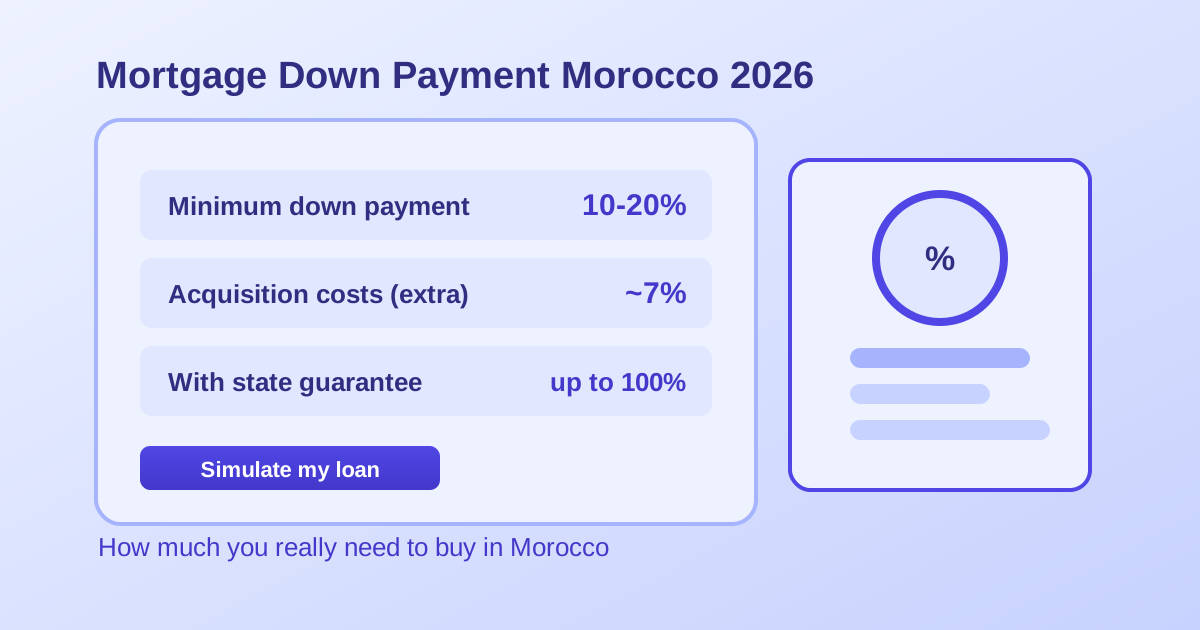
Consider a 900,000 MAD property with 180,000 MAD down payment. Add 7% fees and your total cash becomes 243,000 MAD. Cash-on-cash ROI drops because net cash flow is divided by a larger capital base.
The effect is most visible on low-yield deals. That is why strong investors seek properties with rental upside or cost optimization to offset acquisition fees.
Use our Morocco ROI calculator to model several fee scenarios and see the ROI sensitivity.
Acquisition fee checklist
Acquisition fee checklist
- Get a notary quote early.
- Include registration duty and land registry.
- Add a small buffer for minor administrative fees.
- Update your ROI model with the exact percentages.
Following this checklist helps you avoid surprises at closing and improves your negotiation stance with sellers and lenders.
Before any offer, run a quick test in our rental ROI calculator to validate the deal.
Hidden or overlooked costs
Beyond the main fees, small administrative costs can appear: document copies, certificates, minor filings, or technical checks. Individually small, they accumulate and should be in your acquisition budget.
If you finance the purchase, bank costs matter too: loan file fees, insurance, and guarantees. These can add several thousand MAD and reduce your effective ROI.
Include a small contingency in your ROI calculator so your model reflects the cash you will actually mobilize.
Negotiation levers
Some components are fixed, but you can optimize others. Negotiate the purchase price, request clear notary quotes, and avoid overpaying for the asset. Reducing the purchase price reduces the tax base and total acquisition fees.
A 2–3% discount on price can offset a significant share of fees. This highlights the value of combining financial analysis with strong negotiation.
Use the rental ROI calculator to test multiple price scenarios and see the impact on returns before making an offer.
Align fees with your strategy
Acquisition fees shape your strategy. If your goal is fast positive cash flow, you will need stronger rent or value-add potential. If your goal is capital preservation, you may accept lower yields with higher stability.
The fees are the same regardless of strategy, so the key is aligning the deal with your objectives and risk tolerance.
Run the numbers in our ROI tool and select the strategy that stays resilient under conservative assumptions.
Typical purchase timeline
The purchase timeline affects cash planning. After a preliminary agreement, you sign a contract, then proceed with notary formalities. Payments for taxes and notary fees often occur before the final deed.
If you combine purchase and renovation, timing becomes even more important. Poor planning can delay listing and reduce early cash flow.
Keep a liquidity buffer to cover fees through completion and registration.
Documents to prepare
Prepare identification, proof of financing, and all documents requested by the notary. Missing items can slow the acquisition and create unwanted delays.
If the purchase is financed, banks may ask for additional documentation. Anticipate these requests to keep the deal moving.
Good preparation reduces indirect costs and helps you get the property to market faster.
Fees and financing interaction
Banks often do not finance acquisition fees. That means the fees typically come from your own cash, increasing the required down payment.
This can limit how many properties you can purchase, which is why optimizing fees and negotiating the price matters.
Use our ROI calculator to confirm total cash requirements before signing.
Numeric example to visualize impact
Assume a 1,100,000 MAD purchase. At 7% fees, you add 77,000 MAD. If your cash was 250,000 MAD, your total invested cash becomes 327,000 MAD, which changes ROI immediately.
With 20,000 MAD annual net cash flow, ROI drops from about 8% to roughly 6.1% once fees are included. That difference is significant when comparing deals.
Recreate this scenario in the calculator and adjust assumptions to reflect your real numbers.
Operational summary
Acquisition fees are real cash outflows. Treat them as part of your invested capital and include them in every ROI calculation.
Before any offer, add fees to your down payment, estimate net cash flow, and compare properties with the same method.
Use the ROI calculator to do this quickly and avoid misleading numbers.
Final checklist for a clean purchase
Confirm the fee breakdown with the notary and keep written estimates. Small discrepancies at closing can change your total cash requirement.
Double-check that your financing plan covers both the purchase and fees. If the bank does not finance fees, ensure you have the cash ready.
Run a final scenario in the calculator with the exact numbers before you sign the deed.
Common pitfalls to avoid
Do not assume fees will be the same across all transactions. Ask for a precise quote and update your model with real numbers.
Avoid calculating ROI with gross rent only. Always subtract expenses and include vacancy to prevent an overly optimistic forecast.
When in doubt, test a conservative scenario in the ROI calculator and see if the deal still works.
One-minute recap
Add fees to your invested cash, calculate net cash flow, and compare deals on the same basis. This simple discipline protects you from misleading ROI.
If the ROI looks good only under perfect assumptions, the deal is fragile. Favor deals that stay acceptable under conservative inputs.
Final note
Acquisition fees are not optional, so treat them as a fixed reality in every model. Once you do, your decisions become clearer and more defensible.
When in doubt, simulate the downside in the ROI calculator. If it still works, you have a strong case.
A conservative model today prevents expensive surprises later.
Keep it simple.
Use our Morocco rental profitability calculator
Gratuit · Résultats en 2 minutes